


All postsSwitching apps
Scrivener alternatives in 2026: an honest guide
Atticus, Vellum, Dabble, Sudowrite, Word and us: what each one is good at, what it costs, and how to switch.
Chris & Randy · 2 min read


Scrivener has been the serious writer’s binder for a long time, and for research-heavy books it’s still excellent. But we hear the same three frustrations again and again: sync that runs through Dropbox, a compile step that takes real study, and separate licences for each platform.
If any of those sound familiar, here are the alternatives worth a look. Prices are from each company’s own website, checked October 2026.
Atticus
A popular formatter with a one-time price ($147 once) that also lets you write. It runs on Windows, Mac, Linux, Chromebook and the browser. Imports are Word only, and grammar checking is an add-on. Atticus vs Salt of the Page.
Vellum
Beautiful print and ebook design with 24 trim sizes and a long track record, at $199.99 to $249.99 once. It’s Mac only, and it formats a book you’ve written somewhere else. Vellum vs Salt of the Page.
Dabble
A friendly cloud writing app with plotting tools and a firm no-AI policy, at $19 to $49 a month, or $699 lifetime. It exports Word rather than a finished EPUB or print PDF. Dabble vs Salt of the Page.
Sudowrite
Built around AI that writes prose with you, at $10 to $44 a month. Great if that’s what you want, the opposite of what you want if it isn’t. Sudowrite vs Salt of the Page.
Word and Google Docs
Free or close to it, and unbeatable for sharing a draft. Long books get unwieldy, though, and neither formats a book for print.
Most authors end up paying for three apps: one to write, one to format, one for the blog.
Where Salt of the Page fits
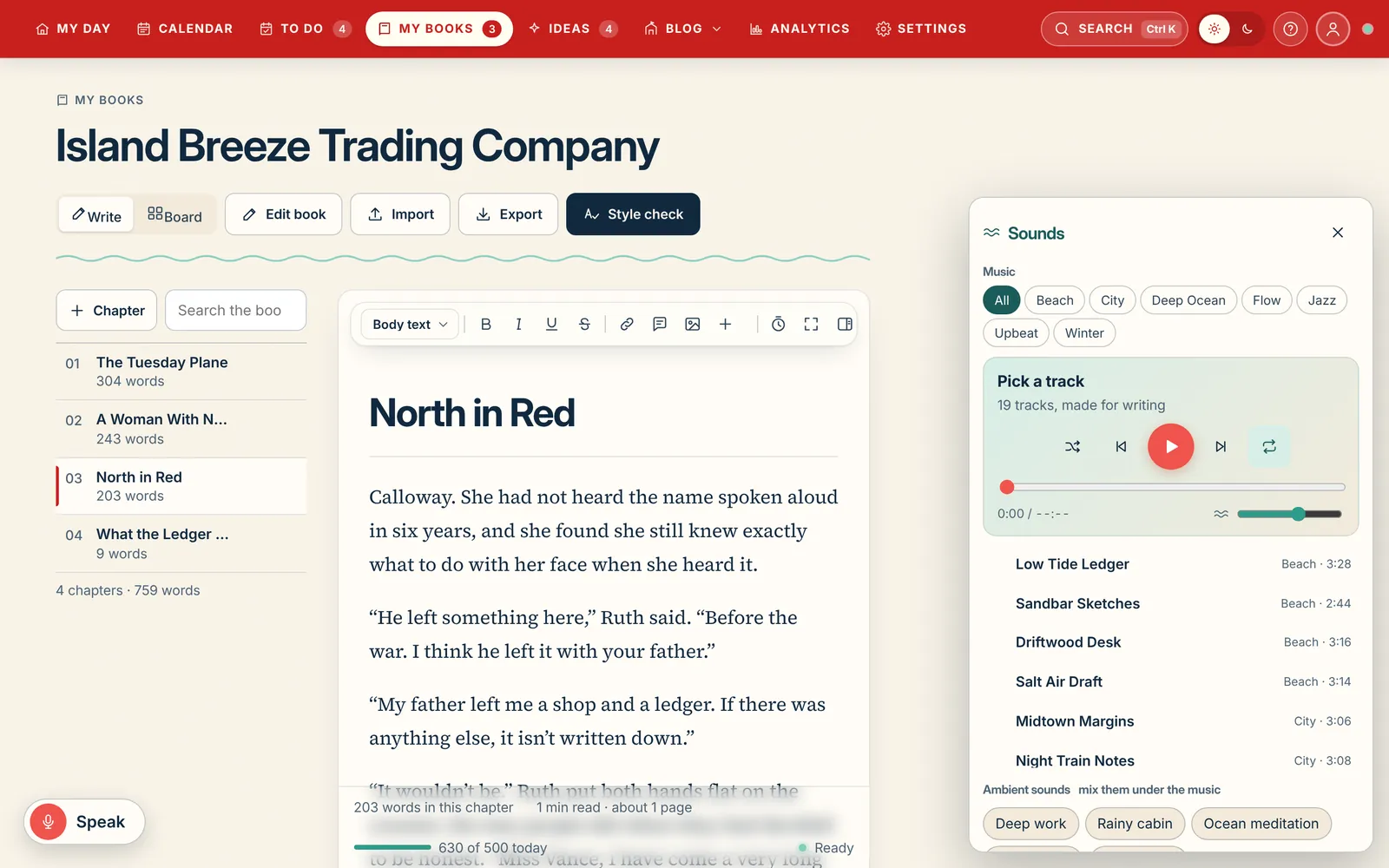
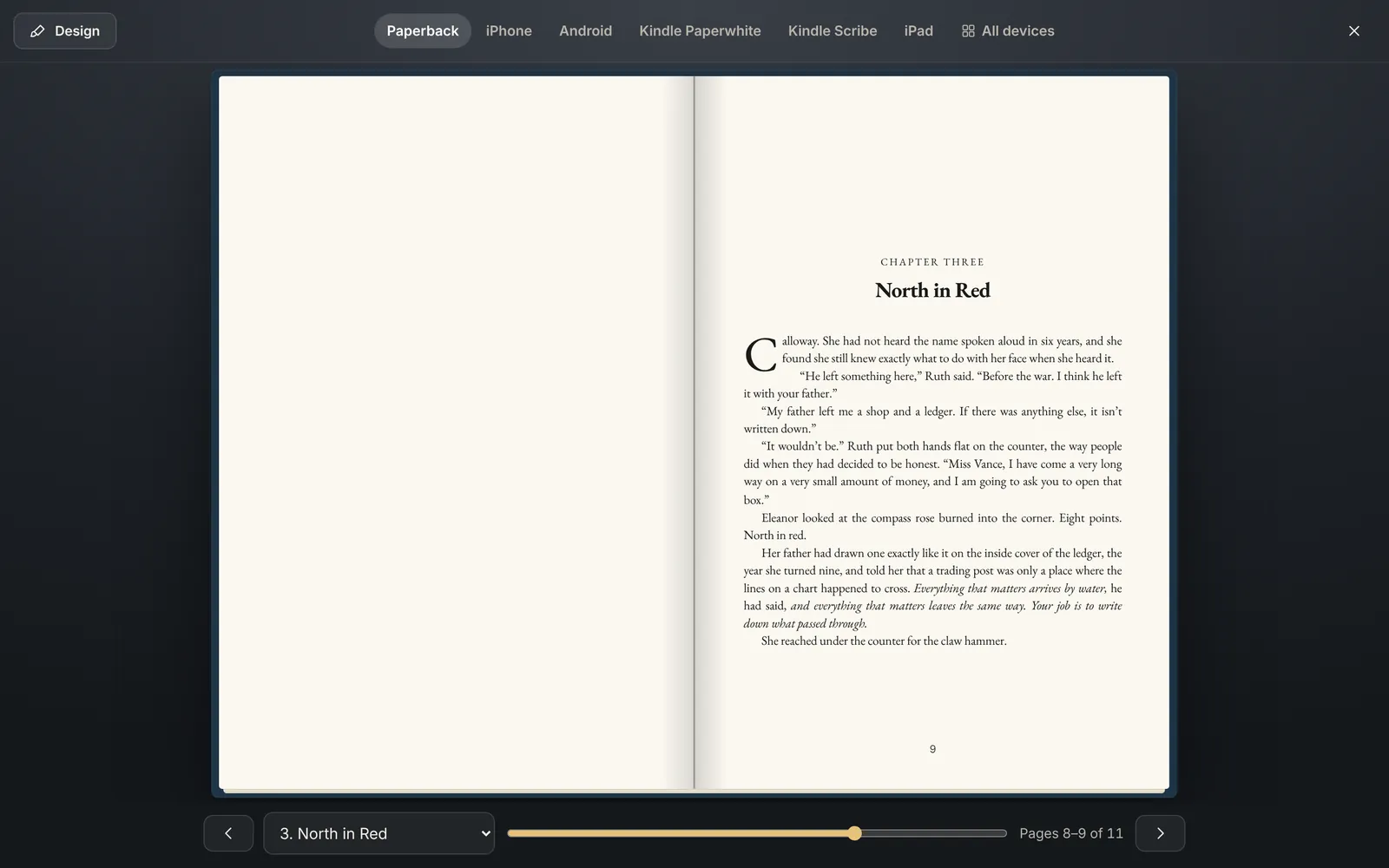
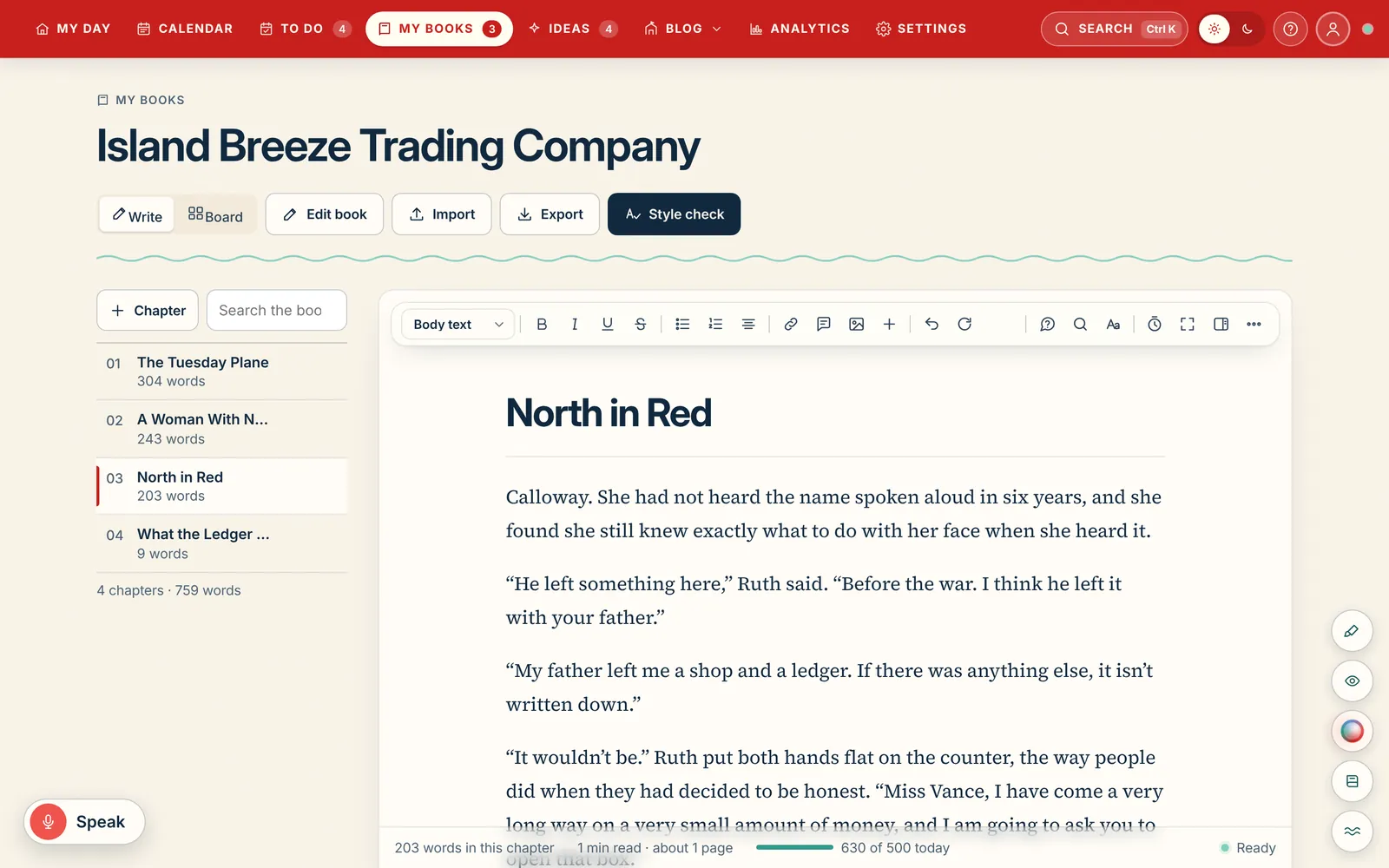
We built it so that one app covers the whole job: the draft and a Source of Truth for your characters and places, a fiction-aware style check, book design with paperback and Kindle previews, EPUB and print PDF, plus blogs for several websites and newsletters. It’s $150 once or $10 a month, on desktop, phone and the web, with sync built in.
Scrivener is still stronger for heavy non-fiction research folders, and Vellum has more trim sizes. We say so on our comparison pages, too.
How to switch from Scrivener
Compile your Scrivener project to a Word file, then import it. Salt of the Page shows you the chapters it found in a preview before anything is saved, and keeps headings, italics, bold and scene breaks.
Chris & Randy
A son and his dad who make Salt of the Page, book writing software for authors who want to finish. Questions about this post? Write to us.
About us